*Coming soon: the Naturalist Nook, a forest exploration station*
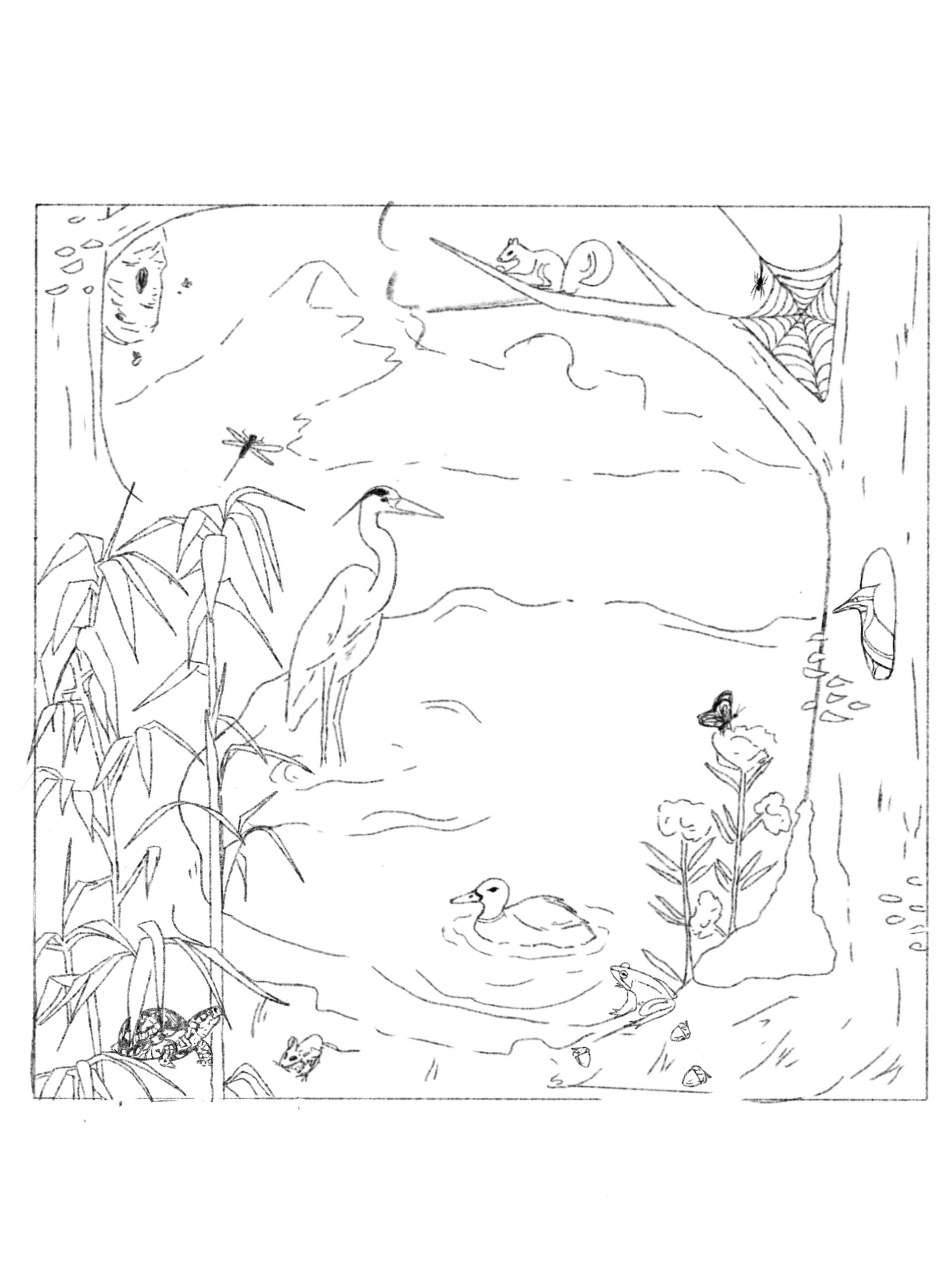
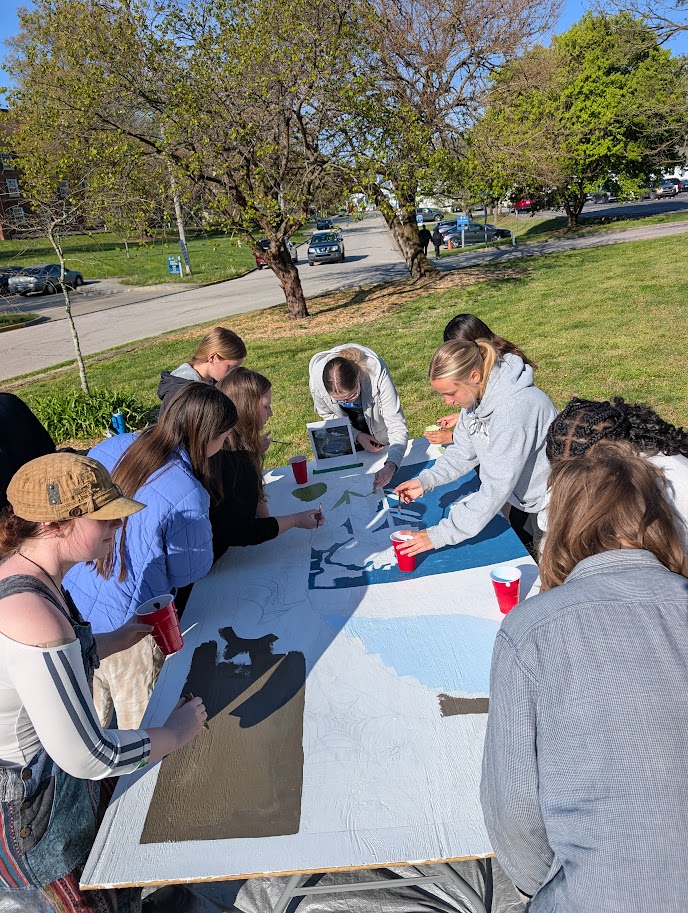
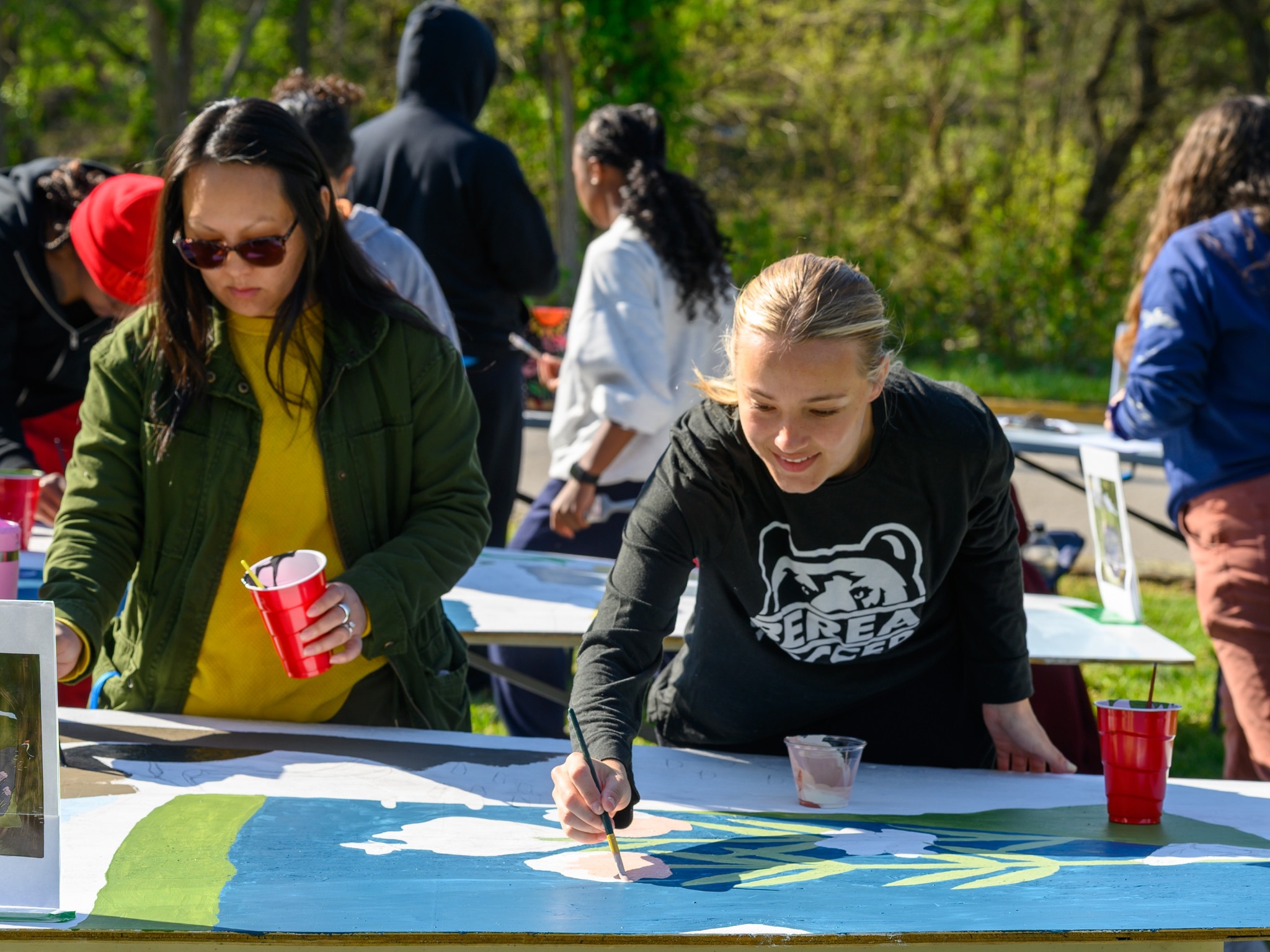
This mural came about with design input, planning, and painting by the Berea College community. Students from the Forestry Outreach Center worked with student Liv Wolfe at Berea College Art in Action to develop a visual representation of our awe-inspiring ecosystem here in Berea. Then, on the Berea-College-unique holiday All Peoples of the Earth Day, dozens of students, staff, and faculty came together to paint Liv's design.
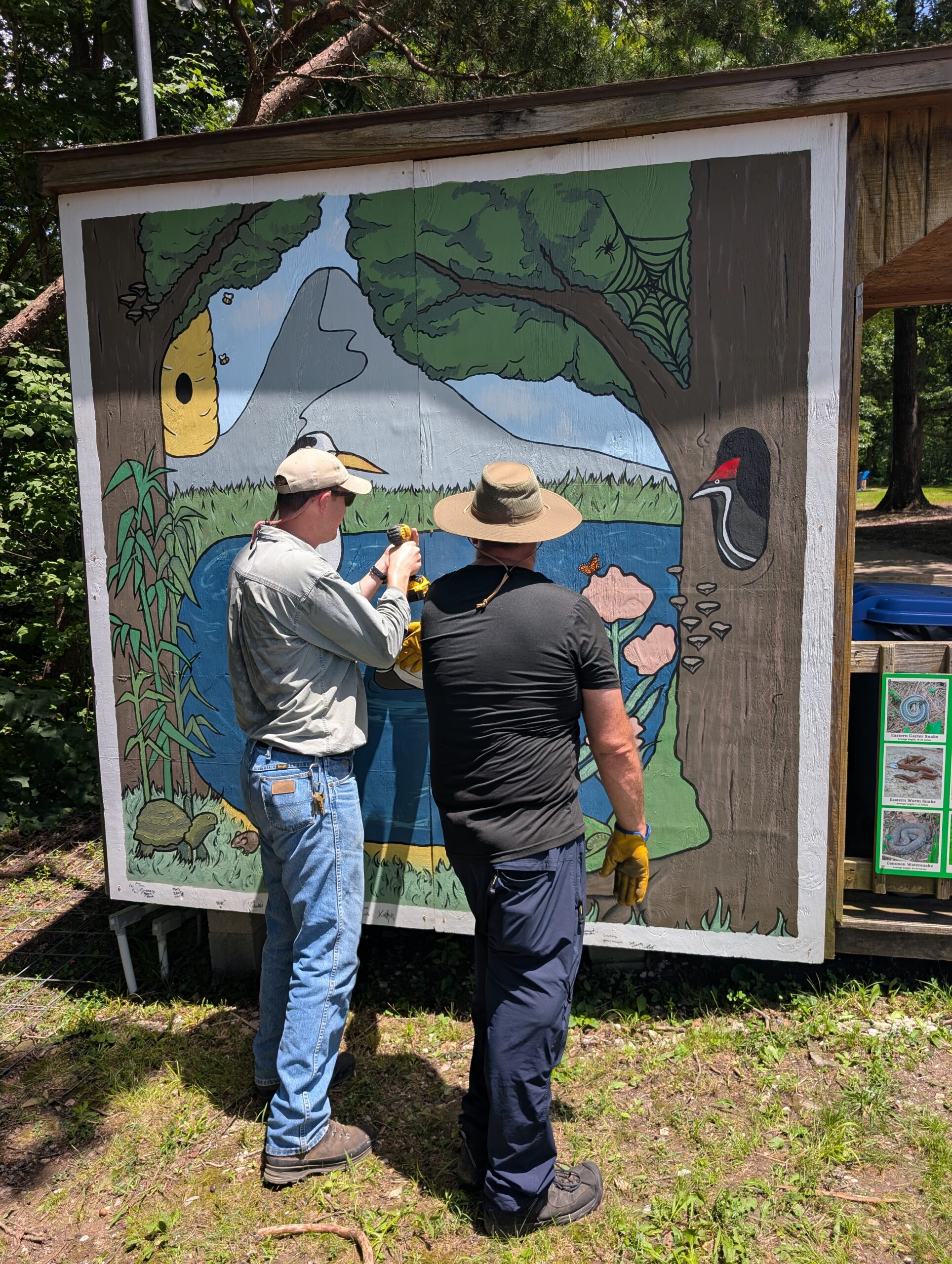
The mural depicts representations of different members of the ecosystem centered around water and geology, the base for all life. Learn about each part of the mural below:
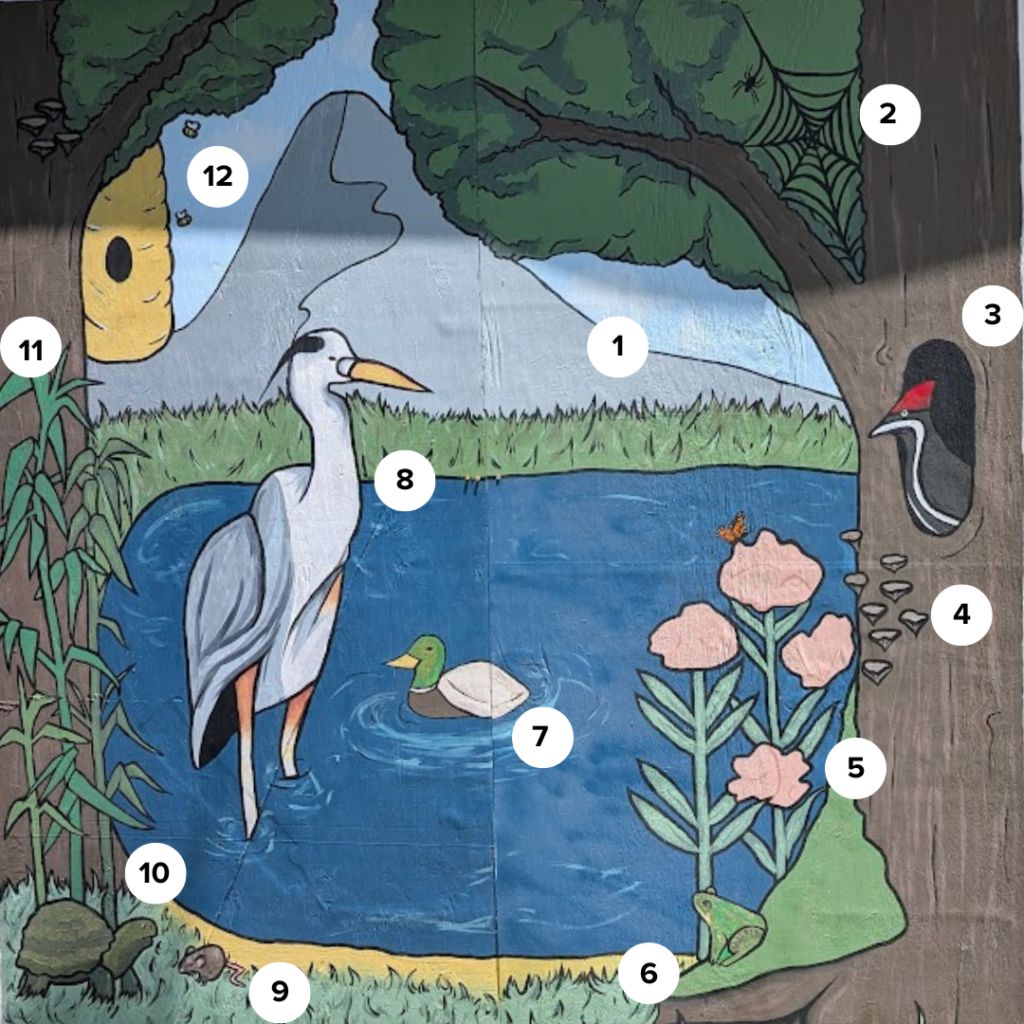
1: Mountain — The Pinnacles are part of the Knobs Region of Kentucky which are the oldest part of the Appalachian Mountains. Once scraping the sky, sharp and jagged, these mountains have been eroded away over millions of years. Learn more about Berea’s geology HERE.
2: Spider web — The concept of a web represents ecosystem functions perfectly; everything is connected and affects one another. Spiders are often misunderstood critters but they are ecosystem regulators, keeping the insect populations in balance. (Leave the spiders in your house–they’ll eat the pests!)
3: Pileated woodpecker — As the largest woodpecker in North America, these incredible birds use dead standing trees and decomposing stumps to find their meals. They are always a sight to see and can often be found in the lower forest and at the start of the trails.
4: Fungi — All around you wherever you go, beneath your feet the soil is filled with mycelium networks–the main bodies of mushrooms and other types of fungi. They connect the trees and plants that allow them to communicate and share resources through their roots. Fungi is an essential decomposer, allowing energy stored in dead organic matter to enter back into nutrient cycling.
5: Common milkweed & monarch butterfly — Arguably the most iconic butterfly in North America, monarchs are representative of the incredible but fragile lives of butterflies, moths and other pollinating insects. Common milkweed and monarchs evolved alongside each other as many other pollinators and plants have. One would not exist without the other. Pollinators are essential for keeping plants, wild and cultivated, alive and thriving.
6: Frog — This frog represents the importance of amphibians (frogs, toads and salamanders); their presence is an indicator of a healthy ecosystem because they are so sensitive to environmental stressors. We are happy to say the Berea College Forest is home to at least 28 species. The Appalachian region starting just east of Berea has the highest salamander diversity in the world.
7: Mallard duck — Ducks are some of the first waterfowl to migrate back to Berea in the spring. Mallards are highly adaptable and help maintain the biodiversity and nutrient cycling of the ecosystem by eating invertebrates, seeds, and vegetation.
8: Great blue heron — Herons are near the top of the food web in wetland habitats making them important in keeping populations in balance. Their presence indicates a healthy wetland ecosystem. Herons can be found in Kentucky year-round.
9: Mouse — Though rodents are often thought of as pests and vermin, they are incredible links in our food webs, providing food to many species of snakes, birds and mammals. Rodents are also excellent at helping to aerate soils and spread seeds.
10: Turtle — Turtles in Berea include the terrestrial eastern box turtle as well as an array of aquatic turtles. They can live for decades and are slow to reproduce and grow, making each one an important member of their small home ranges. Box turtles help spread seeds and scavenge dead organic matter while aquatic turtles balance fish and invertebrate populations; both help cycle essential nutrients from their waste and from their shells when they pass away.
11: River cane — Canebrakes were once widespread in the southeastern United States providing habitat and stabilization for wetlands, streams, and creeks. As these areas have been developed, river cane populations have become smaller and more disconnected. Each stand of cane only flowers once in its lifetime and it may take years to do so. This species is representative of members of our ecosystem that were once established and relied on–by wildlife and humans–that are disappearing, though restoration efforts are underway.
12: Bees & wasps — Arguably the most known and most disliked pollinators, bees are essential to life for humans on Earth. Kentucky is home to hundreds of native bee species that help our wild plants and crops reproduce. Wasps help keep insect populations in balance through predation and they are prey for many species of animals.
Below are photos from the process of the mural’s creation from sketch to final product. Thank you to everyone who contributed to this piece of art that thousands of visitors to the Pinnacles will enjoy.